


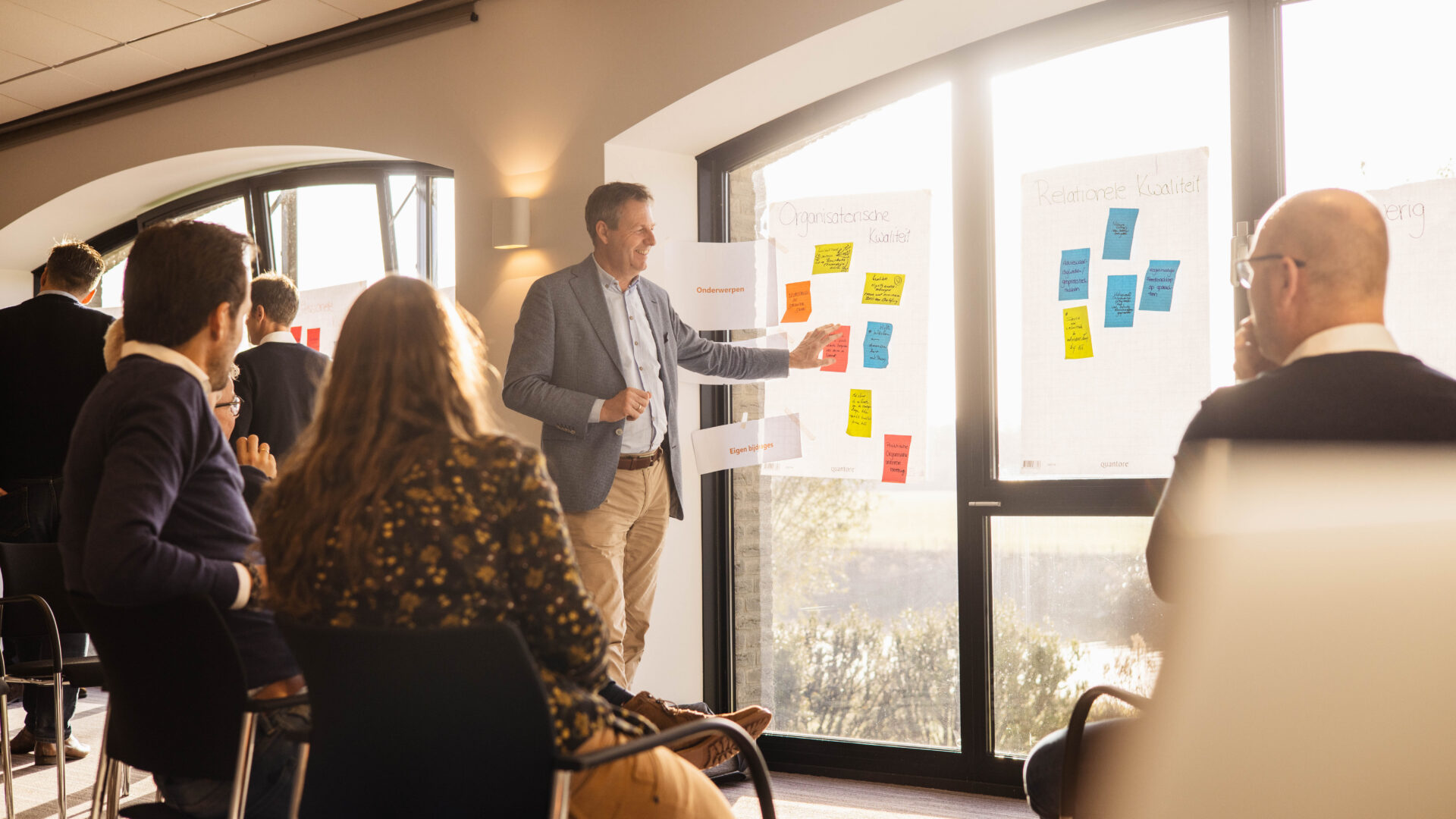
Building a stronger HR function together
Share this post
Challenge
A large public sector organisation was facing significant challenges relating to the labour market, employability, leadership and organisational development. At the same time, its HR function had evolved organically. Different HR disciplines operated from their own areas of expertise, but alignment, responsibilities, priorities and overall coordination were not always clear.
Bright & Company was asked to conduct a comprehensive review. How well was HR functioning as a whole? Was the function sufficiently equipped to address the organisation’s strategic challenges? Where were the obstacles in management, collaboration, roles and positioning? And what was needed to make HR more future-ready and effective?
The assessment revealed that changes to structures and roles alone would not be enough. Leadership within HR, collaboration, trust, professionalism and shared direction also required attention. As a result, the review evolved into a broader programme focused on development and implementation.
Approach
We started with a comprehensive analysis of how HR was structured and operated. Through discussions at different levels, we examined both the formal aspects – structure, roles, management and capacity – and the collaboration and patterns that shaped day-to-day practice.
Together with the organisation, we translated the findings into a concrete improvement agenda. Rather than following a traditional approach of designing solutions first and implementing them later, we worked together on real challenges from the outset, learning along the way and putting improvements directly into practice.
The next phase consists of two closely connected areas of work. We support the HR management team in strengthening management practices, clarifying roles, improving decision-making and collaboration, and leading by example. At the same time, the wider HR organisation is working on improvements in areas including the HR agenda, organisational structure and service delivery, role clarity, capacity management, collaboration and professional capabilities.
This approach combines practical improvements with learning through experience. It not only delivers tangible results, but also strengthens HR’s ability to continue developing and improving independently.
Impact
What began as a review of how HR functioned evolved into a broader effort to strengthen and professionalise the HR function. The assessment created a shared understanding and a clear development agenda, while the next phase focuses on putting that agenda into practice.
This process is leading to a stronger HR management team, clearer roles and management practices, a more coherent and prioritised HR agenda, and further professionalisation of HR. At the same time, collaboration is changing: moving away from fragmentation and a lack of commitment towards greater trust, accountability, shared learning and collective responsibility for the HR function as a whole.
About the author

For a nationwide secondment and consultancy firm, we developed and implemented a new performance and development review cycle, career pathways and clearly defined HR processes, among other improvements.
We established a foundation of good employment practices and mutual responsibility between employer and employees. Rigid working relationships were transformed, enabling people to enjoy their work again and collaborate effectively.

A large national public sector organisation needed to realign its structure and governance with a new strategic direction. We worked to clarify responsibilities, enable more decisive decision-making and develop a coherent organisational plan.

By organising the HR function as a whole organisations can create an HR function that not only supports day-to-day operations but also makes a lasting contribution to organisational ambitions, job satisfaction and the development of human capital.